He snores loudly on the sofa. He gets excited for a walk but soon slows down. On warm days, he pants more than other dogs and seems happier to watch the world go by than join in.
If you own a French Bulldog, Pug, Bulldog or another flat-faced breed, you might assume these behaviours are simply part of your dog’s personality. After all, these breeds are adored for their affectionate nature, expressive faces and larger-than-life characters. They are loyal companions, full of charm, and it’s easy to see why they have become some of the UK’s most popular dog breeds.
But what if those little quirks you’ve come to accept aren’t just breed traits? What if they’re your dog’s way of telling you they’re finding it harder to breathe than they should?
Could you answer “yes” to any of these?
- My dog snores loudly
- My dog struggles in warm weather
- Walks are shorter than they used to be
- My dog tires more quickly than other dogs
- They make snorting or rasping noises when excited
- They sometimes gag or retch
If you answered yes to one or more, it could be worth speaking to our team about BOAS (Brachycephalic Obstructive Airway Syndrome). These signs can have several causes, but they’re worth investigating.
So, what is BOAS?
BOAS in dogs is a condition that affects many brachycephalic (flat-faced) breeds and can impact their breathing, exercise tolerance and overall quality of life.
This condition can affect many aspects of your dog’s everyday life. Knowing the signs can help you spot problems early and choose the right care for your dog.
In this guide, we’ll explain:
- How BOAS affects everyday life
- The signs to look out for
- Why early health checks are so important
- How the right treatment can make a life-changing difference
If you want to learn more about BOAS, explore our services page for information on the signs, treatment options and frequently asked questions.
We love our flat-faced dogs
As a result of intensive breeding, Brachycephalic dogs are unfortunately genetically pre-disposed to a number of significant health conditions including BOAS and Allergic Skin Disease. At The Natural Vet we have a wealth of experience in treating these ailments to a high clinical standard. Our goal is to ensure these very loved pets can live well, and comfortably.
When is snoring more than just snoring?
Some snoring can be common in flat-faced breeds. However, loud or persistent snoring, noisy breathing and difficulty exercising can also be signs that your dog is working harder than they should to breathe.
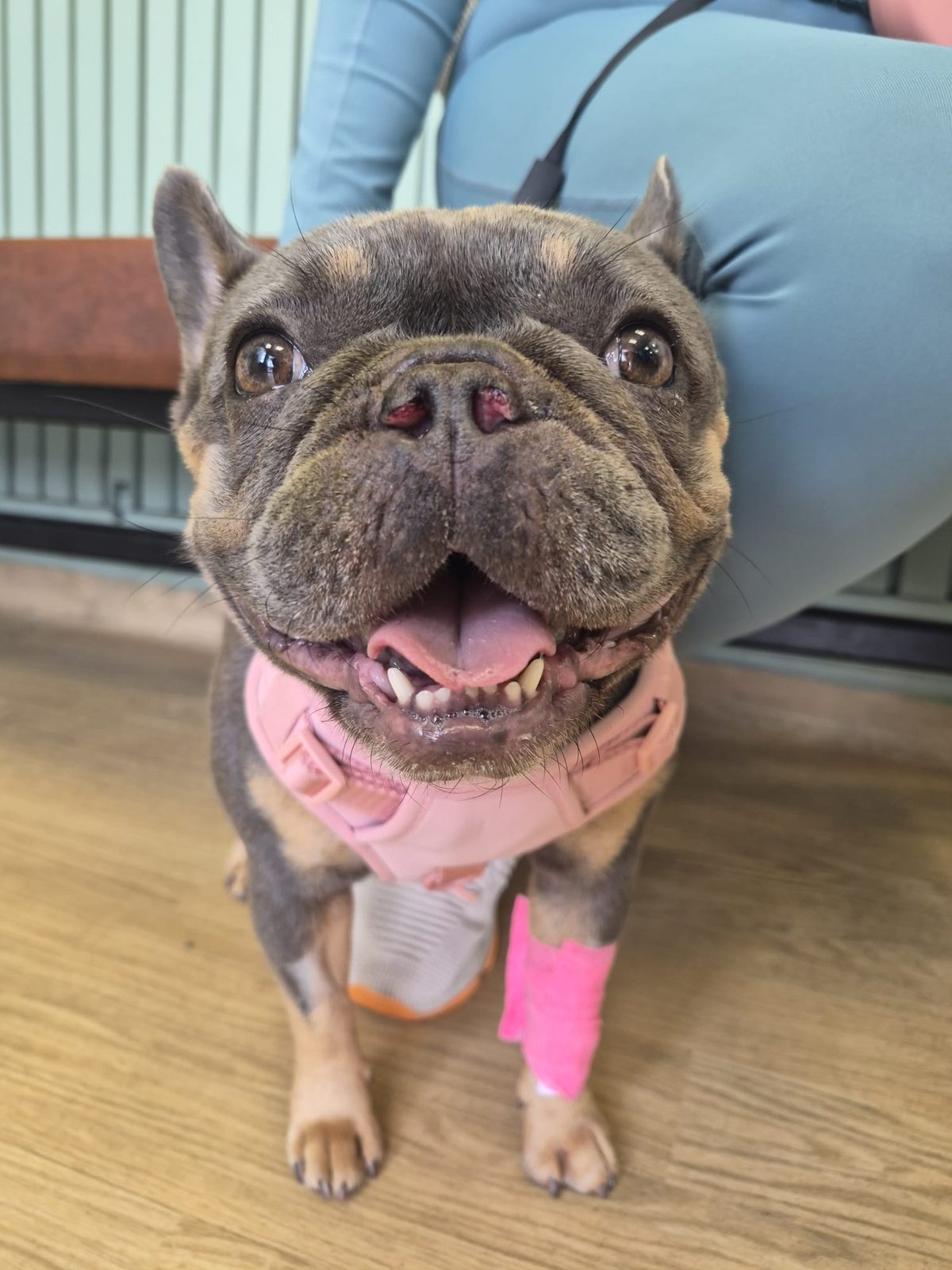
BOAS in dogs occurs when changes in the upper airway make breathing more difficult.
These can include:
- Narrow nostrils that restrict airflow
- An elongated soft palate affecting the throat
- Reduced space within the airway
- Changes that make it harder for air to move freely
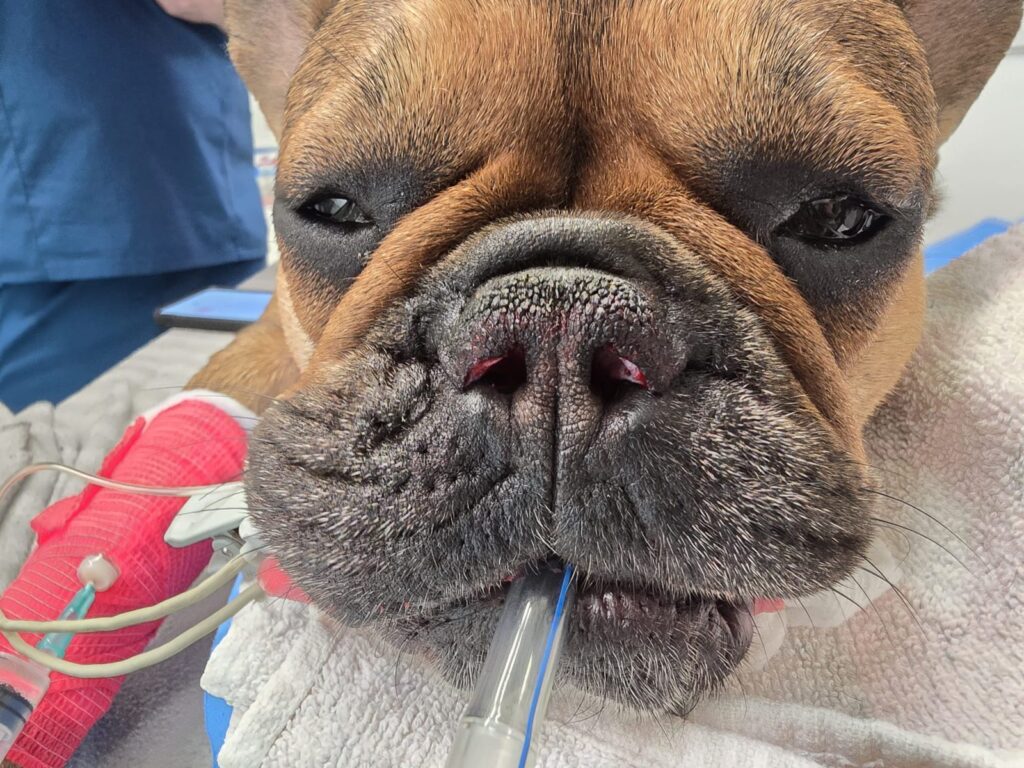
The result is that some dogs have to put more effort into something as simple as breathing.
We asked Dr Adele Fitzpatrick what she wants every flat-faced dog owner to know
“One of the biggest things I want brachycephalic dog owners to understand is that struggling to breathe should never be dismissed as simply being ‘normal for the breed’.
“Many dogs with BOAS are incredibly good at adapting. They will still want to play, greet their owners and enjoy life, even when breathing is taking more effort than it should. This means that owners don’t always realise there is a problem until we make improvements and they see the difference.
“One of the most common things we hear after treatment is, ‘I didn’t realise how much effort breathing was taking until afterwards.’
Dr Adele Fitzpatrick, Owner and Veterinary Surgeon
How BOAS can affect your dog’s quality of life
Breathing problems in dogs can affect everyday activities, including:
- Enjoying walks
- Playing with other dogs
- Sleeping comfortably
- Coping in warm weather
- Recovering after exercise
Why an early BOAS assessment matters
One of the most valuable things you can do for a brachycephalic dog is arrange an early BOAS assessment.
What to expect?
During a BOAS assessment, we can look at:
- How open their nostrils are
- Their breathing pattern
- Their exercise tolerance
- Any early signs of airway restriction
- Their risk factors as they grow
Surgery isn’t always the first step
One of the biggest misconceptions is that a BOAS assessment automatically means surgery, but in reality, the first step is understanding how your dog is breathing today.
Some dogs may simply need monitoring over time, whereas some may benefit from lifestyle advice.
Every dog is different, which is why a personalised assessment is so important.
Could BOAS surgery help your dog?
Many owners feel understandably nervous when they hear the word “surgery”. It is natural to worry about putting your beloved family dog through an operation.
For dogs who need surgical treatment, the aim is to improve airflow and reduce the effort required to breathe.
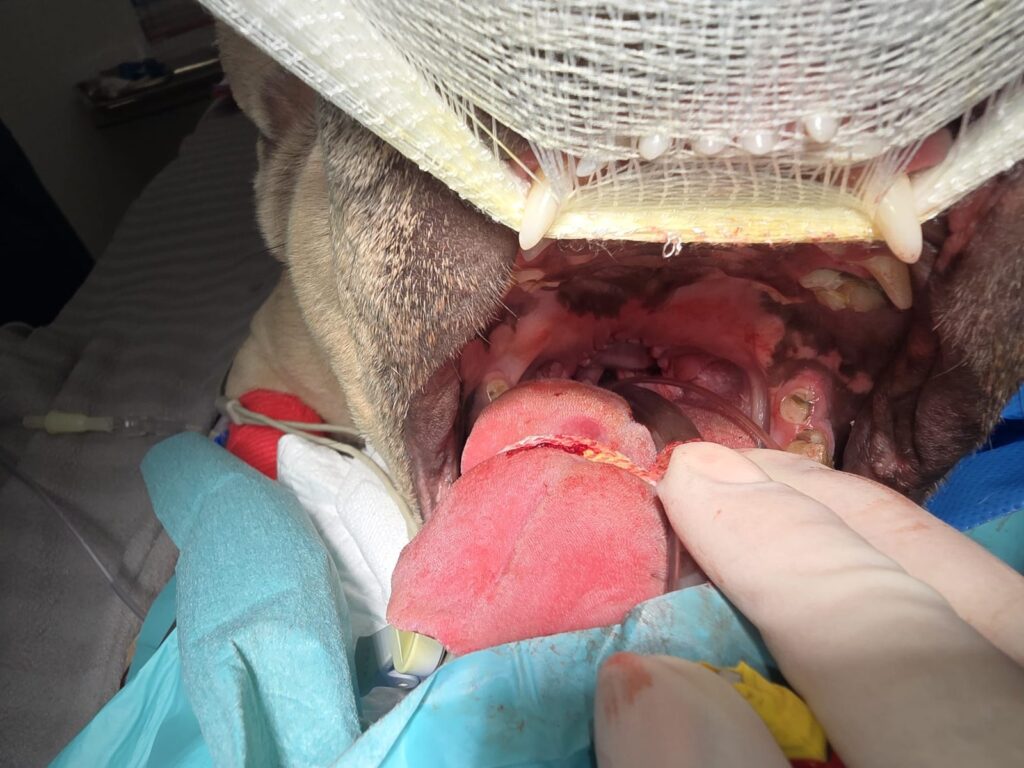
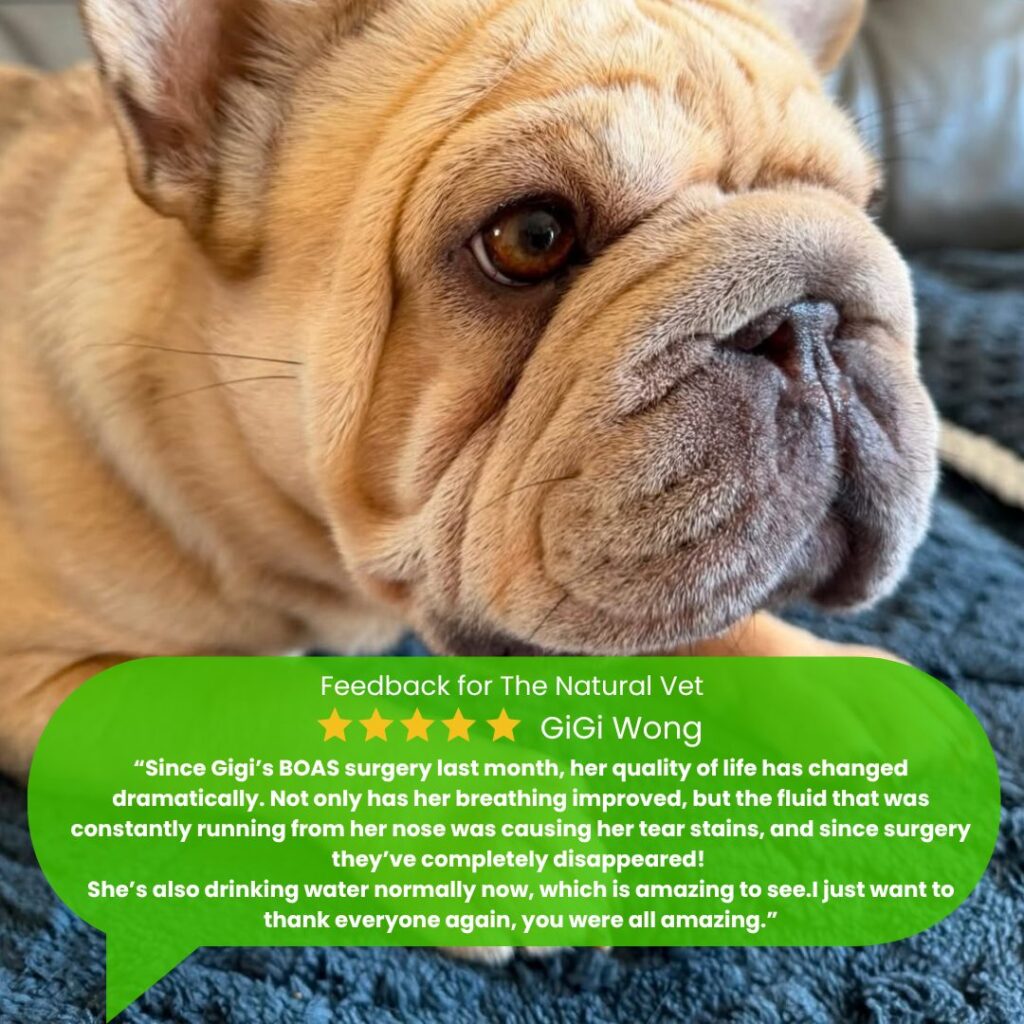
Depending on the individual dog, BOAS surgery can lead to:
- Easier breathing
- Better tolerance for exercise
- More comfortable sleep
- Improved ability to regulate body temperature
- Greater enjoyment of everyday activities
Did you know?
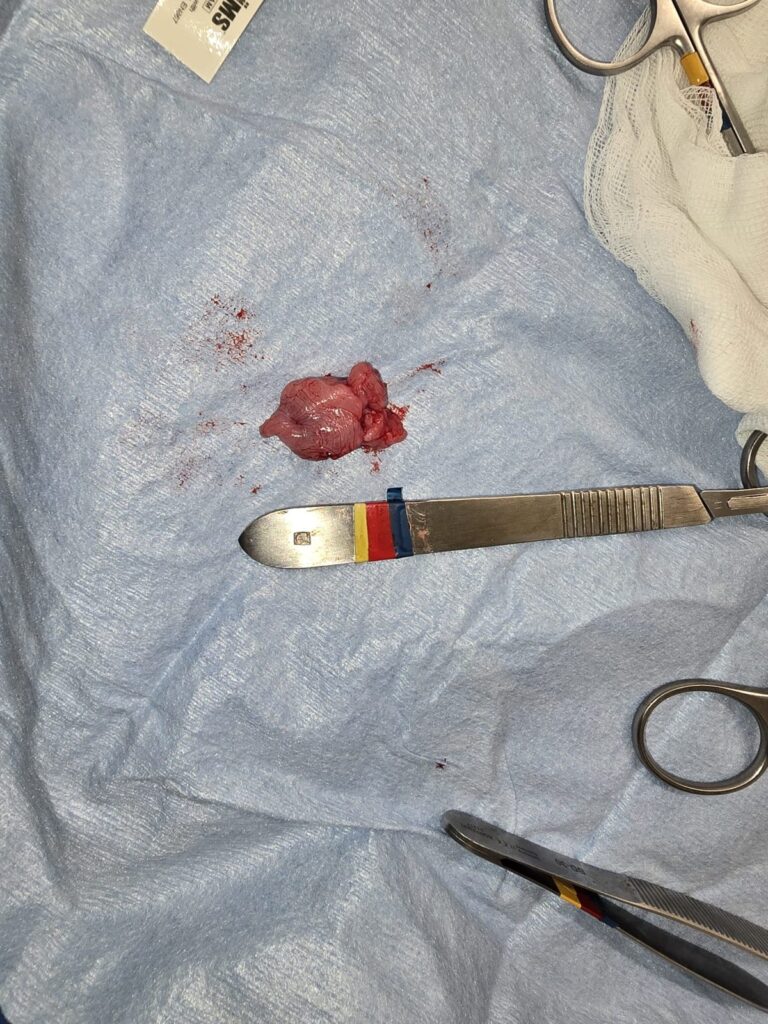
BOAS surgery isn’t simply about making your dog’s nostrils bigger.
For some dogs, narrowed nostrils are part of the problem, but they aren’t the whole story. Other changes within the upper airway can also make breathing difficult. That’s why every dog needs an individual assessment to understand exactly where their airway is restricted before treatment is considered and what benefits we can expect corrective surgery to have.
Helping your dog breathe easier starts with understanding
If you’ve ever found yourself wondering whether your dog’s snoring, noisy breathing or exercise intolerance is “just part of the breed”, we’d encourage you not to ignore that instinct.
If you’re concerned about your dog’s breathing, book a BOAS assessment with our team today. We’ll help you understand what’s normal, what isn’t and what the best next steps are for your dog.
Reviewed by Adele Fitzpatrick BSC (HONS) BVSC MRCVS
This article has been reviewed by Adele Fitzpatrick, Director and Veterinary Surgeon at The Natural Vet.
Adele has a special clinical interest in brachycephalic breeds. Much of her clinical work is dedicated to diagnosing and managing breed-specific conditions, including BOAS, and she is passionate about improving the health and welfare of these breeds through owner education and health testing.