We have officially entered autumn and the weather is starting to turn. The nights are getting darker and, before we know it, firework season will be here!
Here in Scotland, that doesn’t just mean one night. We’ve got Bonfire Night, Hogmanay, Diwali and Chinese New Year.
For many of us, they’re a celebration. They’re an opportunity to get together, toast marshmallows around a bonfire, enjoy an indulgent hot chocolate and watch the sky light up with some amazing firework displays.
For our dogs, however, it isn’t quite so exciting. There’s loud bangs, bright flashes and unfamiliar sounds that can be triggering and out of the norm compared to their usual routine. It’s these things that can create fear and anxiety.
Is your dog anxious about fireworks?
Sometimes the signs of anxiety in dogs are obvious, but they may also be subtle too.
We’ve pulled together a handy table for what behaviour to watch, and what this could tell you.
| Behaviour | What it could tell you |
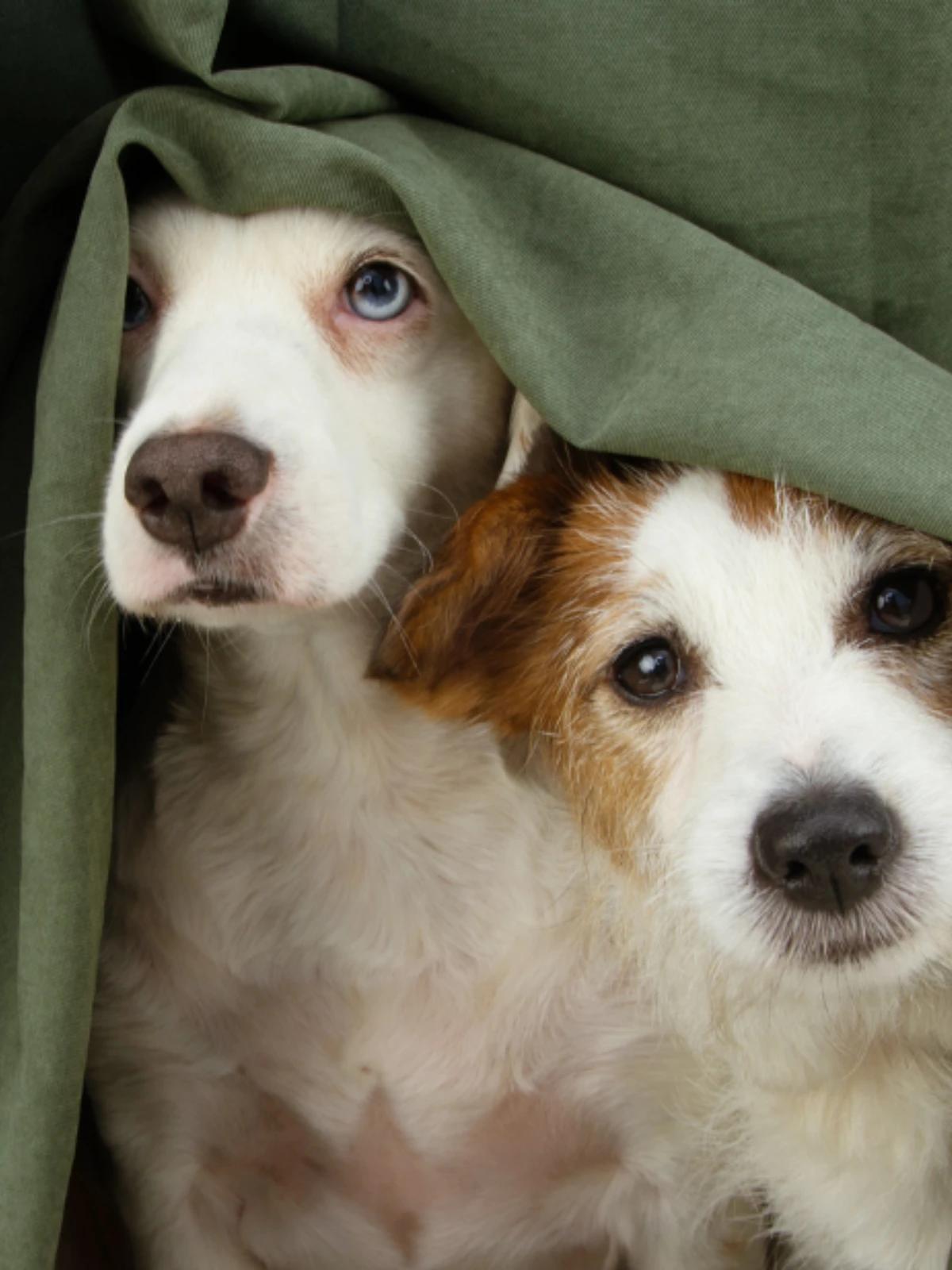
| Hiding | They’re frightened and want to find a quiet place to feel safe. |
| Panting | Your dog may be experiencing stress, even if they aren’t hot or have not been exercising. |
| Pacing | They’re unable to settle and relax. |
| Trembling or shaking | This can be a sign that your dog’s fear or anxiety is becoming more intense. |
| Clinging to you | Your dog may be looking to you for reassurance and using you as their safe place. |
| Refusing food | Their anxiety may be significant enough that eating is no longer a priority even if it’s normally their favourite treat. |
| Barking or vocalising | Your dog may be distressed, startled or attempting to respond to the unfamiliar sounds around them. |
| Toileting indoors | Fear and stress can disrupt normal toileting habits, particularly if your dog is too frightened to go outside. |
| Trying to escape | A frightened dog may try to escape and injure themselves or become lost. |
| Becoming very quiet or withdrawn | Not every anxious dog will appear obviously frightened. Some dogs respond by becoming very still, withdrawn or unusually quiet. |
Where does your dog sit on the firework anxiety scale?
Every dog is different and there’s different levels of anxiety. Some dogs may just feel a little unsettled while others may display an overwhelming amount of fear.
Think about how your dog behaved in previous years. If they were at the severe end of the scale, a year ago, don’t wait until the fireworks start to seek help.
Firework anxiety in dogs can get worse year after year, especially if you don’t do anything to help them.
Speak to our team and we can help you put together an appropriate plan for your dog.
We don’t automatically reach for medications. Instead, we take a holistic approach and consider your dog’s individual needs, their behaviour, health and the severity of their anxiety.
Our aim is to work with you to find the right approach for your individual dog.
Firework anxiety scale
Level 1 – Uneasy
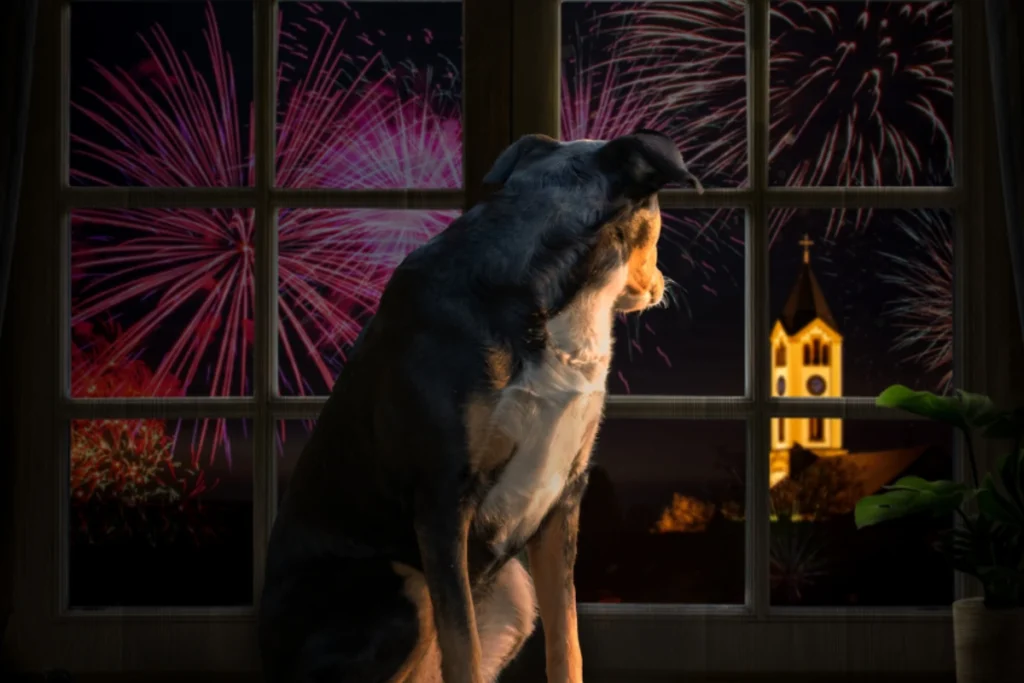
Your dog watches the windows, startles at bangs, becomes more alert or seeks a little more reassurance from you.
They may still eat, play and settle.
Level 2 – Anxious
Your dog may start panting, pacing, hiding, becoming clingy or refusing food.
They are finding it much harder to relax.
Level 3 – Very frightened
You may see trembling, vocalising, persistent hiding, inability to settle or attempts to escape.
At this point, your dog’s fear is significantly affecting their ability to cope.
Level 4 – Panic
Your dog may attempt to break through doors or windows, injure themselves trying to escape or become completely unable to engage with their normal surroundings.
Are some dogs more vulnerable to noise anxiety?
A dog’s response to fireworks can be influenced by a combination of age, genetics, health, temperament and previous experiences. So, two dogs living in the same house can react very differently in the same night.
Interestingly, the large study of 1,225 dogs found that many firework fears developed relatively early in life, with the first year being particularly important.
This is why puppies and young dogs shouldn’t simply be left to find out what fireworks are like. You need to manage their experiences so they have a positive time, learning that unfamiliar noises aren’t something to fear.
It may be that your dog has had a negative experience in the past too. They may not like the sound of thunder, car alarms, construction noise or other sudden sounds.
Just like us, dogs have different personalities. Some are naturally more cautious, while others are confident and curious. Some recover quickly after being startled, while others remain unsettled.
Health can also play a role. Research has found an association between health problems and firework fear, highlighting why we shouldn’t look at noise anxiety in isolation from your dog’s wider wellbeing.
How to prepare to help your dog cope better
One of the biggest mistakes we see is leaving everything until the night of the fireworks.
But trying to introduce a new strategy while your dog is already frightened is very different from preparing in advance.
Thinking in terms of weeks rather than hours gives you much more opportunity to prepare, so we’ve pulled together a firework preparation timeline.
| When | What you can do |
| 6–8 weeks before | Start thinking about your dog’s previous experiences, begin appropriate behavioural preparation and speak to your veterinary team if they have struggled before |
| 3-5 weeks before | Discuss whether herbal support or other interventions may be appropriate for your individual dog. |
| 1–2 weeks before | Create their safe space, practise calming routines and check your management plan |
| The week of Bonfire Night | Keep routines predictable, avoid unnecessary stress and exercise earlier in the day. |
| Firework evening | Keep your dog inside, draw the curtains and provide access to their safe space. It’s important you stay calm too! |
| Afterwards | Give your dog time to recover and consider what worked and what could be improved for the next event. |

How to calm dogs during the fireworks?
Here’s a few simple things that can make the environment feel safer.
- Create a safe space: Give your dog somewhere they can retreat to when they want to and don’t force them to come out when they’re not ready.
- Close curtains and windows: Before it gets dark, walk around the house and make sure all the windows are closed. Draw the curtains and pull down any blinds to block out the flashes of light from the fireworks and make the loud bangs a little less intense.
- Put on background noise: Make their environment feel like it’s just a normal, average day. Turning on the TV or tuning in to the radio can help mask out the sounds from outside.
- Take them for an earlier evening walk: Take your dog out while it is still light and keep them safely indoors once fireworks are expected. The garden isn’t always a safe space either, especially when the displays begin. Remember to ensure all gates are closed and there’s no gaps in the fences. Even dogs with excellent recall can panic when frightened!
- Let your dog choose how much interaction they want: In the past, dog owners were told not to interact with their pets when they’re frightened but this isn’t the case anymore. All dogs react differently, Some dogs want to be beside you, whereas others want to hide.
Be reassuring and provide comfort if they seek it, or leave them alone if that’s what they want.
Could herbal medicine help my dog?
For some dogs, herbal medicine may form part of their support plan during periods of situational anxiety, such as fireworks season.
At The Natural Vet, we can prepare short-term herbal tinctures for dogs where we feel this may be appropriate.
However, herbal medicine isn’t automatically the right choice for every dog. We consider your dog’s individual health, behaviour, medications and the severity of their anxiety before recommending any treatment.
Natural doesn’t always mean suitable for every pet, which is why we recommend speaking to our veterinary team rather than giving your dog a product simply because it is labelled as “natural”.
For some dogs, herbal support may be helpful alongside changes you can make at home. For others, behavioural support, conventional medication or a combination of approaches may be more appropriate.
Remember, Remember… Prepare Before the 5th of November
If your dog has struggled with fireworks before, don’t wait until Bonfire Night to start thinking about it.
Firework fear can change over time, and research suggests that early preparation and positive associations may help prevent fear from developing or becoming more severe.
If you need support to help prepare for this firework season, get in touch with our team today.