Your pet doesn’t have to be limping or crying for there to be a reason to look more closely at their wellbeing.
Sometimes, the signs are much quieter. They might take a little longer to get up after a nap, hesitate before jumping into the car, or simply lose interest in activities they once loved.
These changes can have many possible causes, but they’re worth paying attention to. Understanding what’s changed and why can help you find the right ways to support your pet’s health and comfort.
Veterinary acupuncture could be one option to consider.
Here at The Natural Vet, we use veterinary acupuncture as part of an integrated approach to your pet’s care.
The treatment is becoming more and more recognised as a complementary treatment option, although many pet owners are still unfamiliar with how it works or when it might be beneficial.
So, when could acupuncture be worth considering for your pet?
Here are six situations where it could be helpful to speak to our team and find out more.
1. They’re taking longer to get up
Does your pet need a few moments to get moving after lying down?
Do they wake up in the morning and look a little stiff and then loosen up once they start moving?
These are usually signs of stiffness and it’s worth getting your pet assessed.
How acupuncture could help
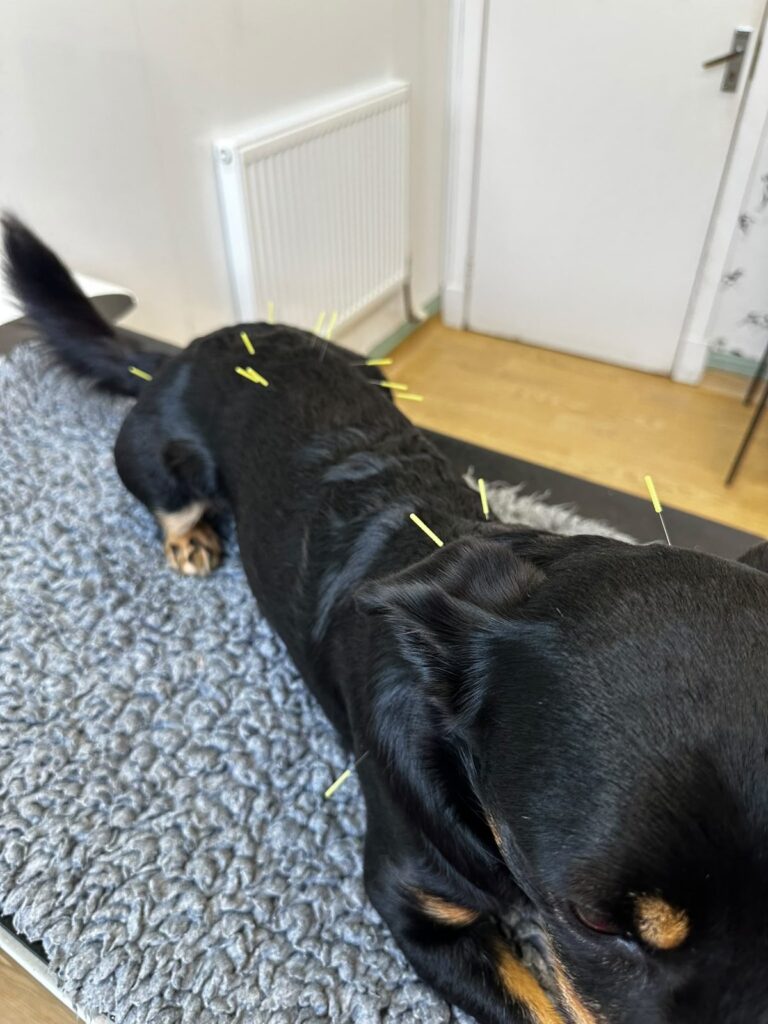
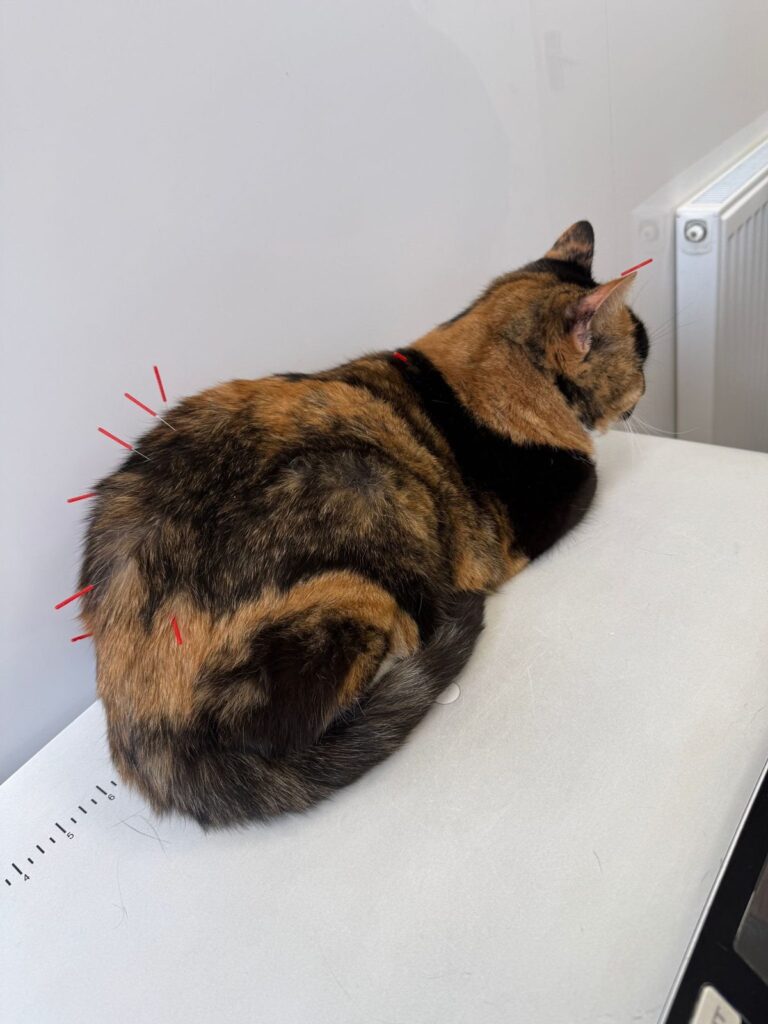
Veterinary acupuncture may help dogs and cats experiencing stiffness and discomfort by stimulating the release of endorphins, the body’s natural pain-relieving chemicals. This can help ease discomfort, relax muscles and may help reduce inflammation.
As part of our holistic approach, acupuncture can be used alongside conventional veterinary medicine. In some cases, it may also help reduce the amount of medication needed, but this will always depend on your dog’s individual needs.
2. They’re hesitating with stairs, jumping or getting into the car
It’s easy to overlook small changes in the way your pet moves around the house.
Maybe they used to run up the stairs but now sit at the bottom and just gaze at the top. Perhaps they no longer jump up onto the sofa or hesitate before getting into the car boot.
These changes don’t necessarily mean your pet is in pain, but they can tell you that a movement has become more difficult or uncomfortable.
How acupuncture could help
Pet acupuncture may help ease pain within the muscles, caused by a number of conditions including arthritis. It can also improve blood flow to the affected area, which may help support the body’s natural healing process.
3. They’re constantly licking or irritated by their skin
If your pet is constantly licking, scratching or chewing at their skin, it could be a sign of an underlying skin irritation or allergy. These issues can leave your pet feeling uncomfortable and frustrated, particularly when the irritation keeps coming back.
The first step is always to investigate the underlying cause and manage it appropriately. Depending on the diagnosis, this may include medication, dietary changes, allergy management or other veterinary treatment.
Acupuncture may then be considered alongside conventional treatment to help manage your pet’s comfort and overall wellbeing.
How acupuncture could help
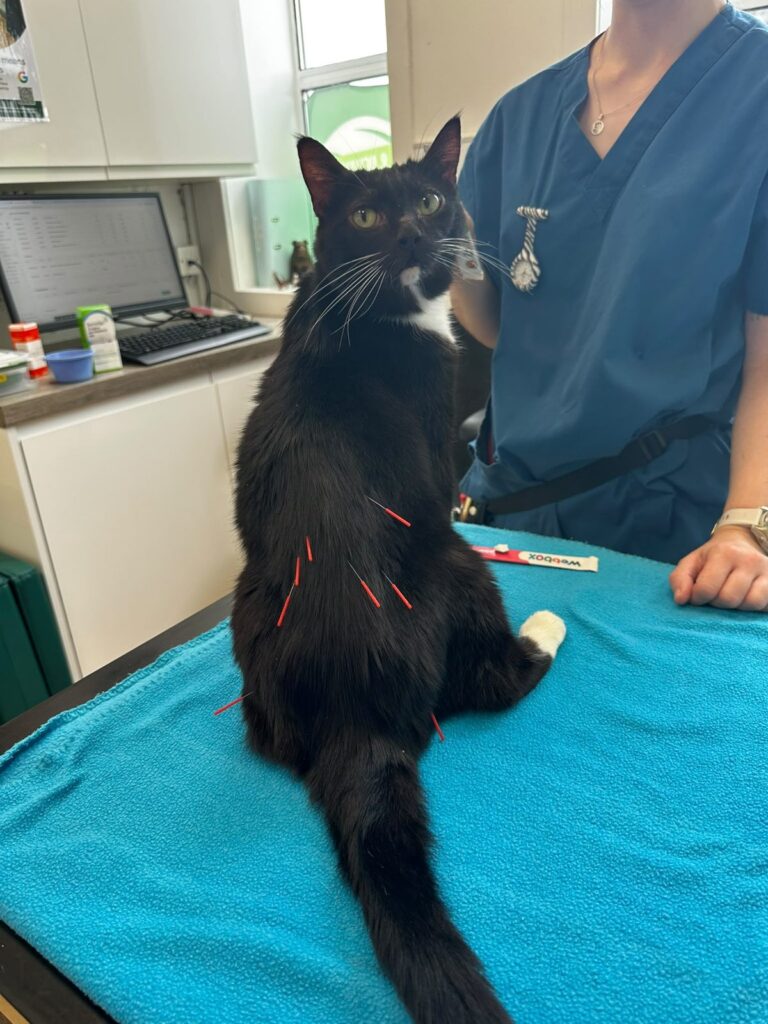
Pet acupuncture may help calm the nervous system, which can help reduce stress-related itching and discomfort. It may also support healthy blood flow, while the release of natural hormones can help reduce inflammation and promote relaxation.
4. Their walks, exercise or recovery aren’t what they used to be
Were you used to taking your dog on hour long walks and now they’ve started slowing down after only 20 minutes? Or does it take them longer to recover afterwards?
Has your cat stopped visiting high-up safe places, such as window-sills and the top of the wardrobe?
Or are they recovering from an injury or surgery and aren’t quite moving with the same confidence they had before?
Changes in exercise tolerance and movement can have many possible causes, including pain, joint problems, muscle weakness, reduced fitness or an underlying health condition.
After an injury or surgery, getting back to normal involves more than just giving the body time to heal. Keeping your pet’s muscles strong, rebuilding their strength and helping them feel confident again can all play an important part in their recovery.
How acupuncture could help
Veterinary acupuncture can be used to support the treatment of visceral conditions and may be beneficial during recovery from cavity surgery.
It can also help manage pain following orthopaedic surgery, and as a complementary therapy for chronic pain, it may support patients in returning to exercise by reducing myofascial pain.
5. They’re experiencing changes in their bowel movements
If your pet has experienced changes to their toilet habits, such as diarrhoea or constipation, it’s important to investigate the underlying cause.
Ongoing changes in your dog’s toilet habits can be linked to a number of digestive conditions and should be assessed by a vet.
Treatment will depend on the cause and may include dietary management, medication or other veterinary care.
As part of disease management, our veterinary acupuncture may be considered as part of a wider supportive care plan to help your dog or cat feel more comfortable and regulate their nervous system.
How acupuncture could help
The fine needles used in acupuncture may help regulate muscle contractions within the digestive tract, which may help ease symptoms such as diarrhoea and constipation. It may also allow toileting to be a more comfortable experience for pets who experience straining or frequent defecation.
6. They’re living with an ongoing or complex condition
For dogs living with chronic or complex health problems, care isn’t always about finding one treatment that makes everything better.
Instead, the focus may be on helping them remain comfortable and mobile over the long term.
This might be relevant for cats and dogs living with ongoing musculoskeletal discomfort, chronic pain or other conditions where maintaining quality of life is an important part of their care.
How acupuncture could help
Once your pet’s condition has been properly investigated, veterinary acupuncture may be recommended as part of their individual care plan.
The aim is to look at the whole dog and consider what combination of treatments and lifestyle support is most appropriate for them. This may include conventional medication, rehabilitation, exercise management, dietary changes and complementary therapies such as acupuncture.
No two dogs experience illness in exactly the same way, so their treatment plan shouldn’t look the same either. We aim to provide patient-centred care in chronic disease, working with you to establish specific and measurable outcomes to monitor our progress and your pet’s wellbeing.
Looking at the patient, not just the diagnosis
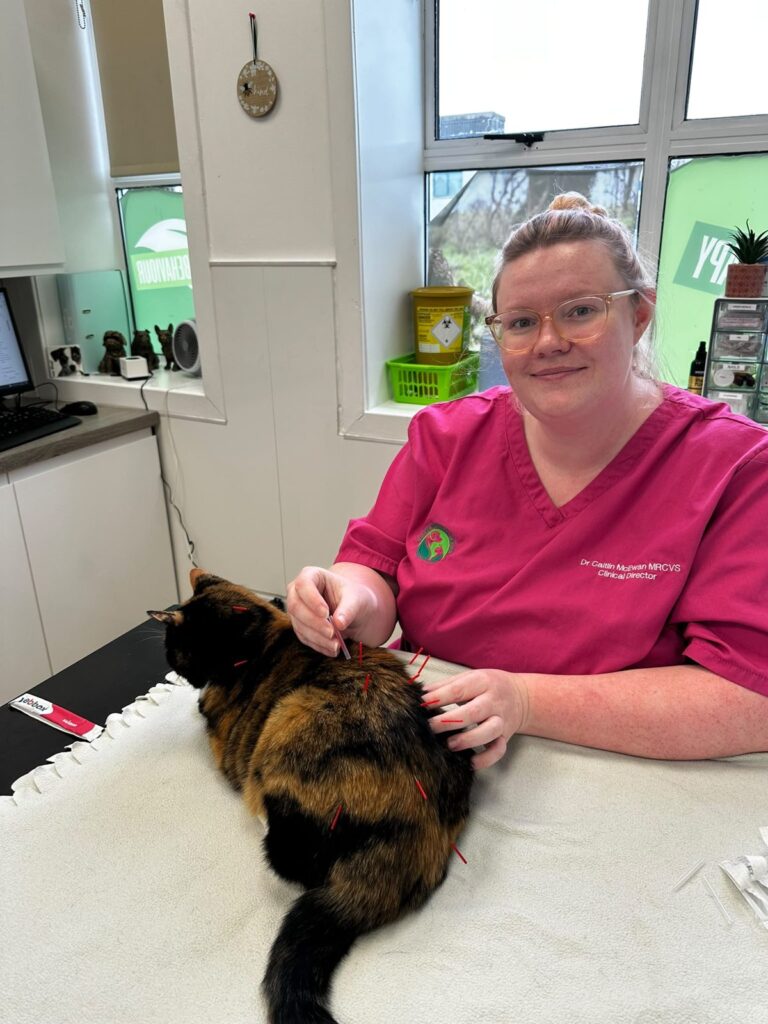
“At The Natural Vet, we don’t believe in treating a diagnosis on a piece of paper. We want to treat the pet in front of us, in partnership with their owner.
“Two patients can have the same diagnosis but very different experiences, so their treatment shouldn’t necessarily look the same. We consider their age, lifestyle, temperament, nutrition, medical history and, importantly, what their owner is noticing at home.”
“Holistic practice is about looking at the whole picture and deciding what conventional and complementary treatments have a place in that individual pet’s care. For example, a patient who experiences chronic diarrhoea could benefit significantly from acupuncture which may treat pain within the gastrointestinal tract AND muscle pain that results from straining while toileting.”
“A truly patient-centred approach is at the heart of what we do at The Natural Vet, and acupuncture is a huge part of that.”
Dr Caitlin McEwan MRCVS, Clinical Director and Veterinary Surgeon
Could acupuncture have a place in your pet’s care?
If you’ve noticed your dog has started moving differently, becoming less active or simply isn’t quite themselves, we’d recommend starting with a veterinary assessment.
Understanding why your dog has changed is important. Our team can investigate the underlying problem, discuss treatment options and consider what approach is most suitable for your dog.
If acupuncture is recommended, we will initially see your pet weekly for at least four weeks. We then aim to gradually increase the interval between treatments depending on how your pet is responding.
If you’d like to learn more about pet acupuncture, check out our service page.